Friday, May 07, 2010

The Culture of Critique’s preface (6 of 10)


“The Jewish problem is one of the greatest problems in the world, and no man, be he writer, politician or diplomatist, can be considered mature until he has striven to face it squarely on its merits.”

…......................—Henry Wickham Steed


Here I present the sixth part of Prof. MacDonald’s 2002 Preface to The Culture of Critique. The inclusion of images is entirely my own initiative. No images appear in the printed text of MacDonald’s Preface. For the Contents Page and my introduction, click here.


From The Culture Of Critique to The Culture Of The Holocaust

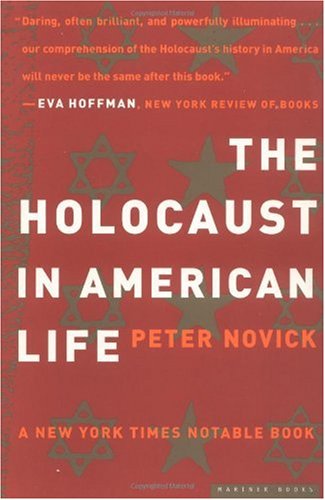
While CofC describes the “culture of critique” dominated by Jewish intellectual and political movements, perhaps insufficient attention was given to the critical elements of the new culture that has replaced the traditional European cultural forms that dominated a century ago. Central to the new culture is the elevation of Jewish experiences of suffering during World War II, collectively referred to as “the Holocaust”, to the level of the pivotal historico-cultural icon in Western societies. Since the publication of CofC, two books have appeared on the political and cultural functions of the Holocaust in contemporary life—Peter Novick’s The Holocaust in American Life, and Norman Finkelstein’s The Holocaust Industry. Novick’s book, the more scholarly of the two, notes that the Holocaust has assumed a preeminent status as a symbol of the consequences of ethnic conflict. He argues that the importance of the Holocaust is not a spontaneous phenomenon but stems from highly focused, well-funded efforts of Jewish organizations and individual Jews with access to the major media:
We are not just “the people of the book,” but the people of the Hollywood film and the television miniseries, of the magazine article and the newspaper column, of the comic book and the academic symposium. When a high level of concern with the Holocaust became widespread in American Jewry, it was, given the important role that Jews play in American media and opinion-making elites, not only natural, but virtually inevitable that it would spread throughout the culture at large. (Novick 1999, 12)
The Holocaust was originally promoted to rally support for Israel following the 1967 and 1973 Arab-Israeli wars: “Jewish organizations... [portrayed] Israel’s difficulties as stemming from the world’s having forgotten the Holocaust. The Holocaust framework allowed one to put aside as irrelevant any legitimate ground for criticizing Israel, to avoid even considering the possibility that the rights and wrongs were complex” (Novick 1999, 155). As the threat to Israel subsided, the Holocaust was promoted as the main source of Jewish identity and in the effort to combat assimilation and intermarriage among Jews. During this period, the Holocaust was also promoted among non-Jews as an antidote to anti-Semitism. In recent years this has involved a large scale educational effort (including mandated courses in the public schools of several states) spearheaded by Jewish organizations and staffed by thousands of Holocaust professionals aimed at conveying the lesson that “tolerance and diversity [are] good; hate [is] bad, the overall rubric [being] ‘man’s inhumanity to man’” (pp. 258-259). The Holocaust has thus become an instrument of Jewish ethnic interests not only as a symbol intended to create moral revulsion at violence directed at minority ethnic groups—prototypically the Jews, but also as an instrument to silence opponents of high levels of multi-ethnic immigration into Western societies. As described in CofC, promoting high levels of multi-ethnic immigration has been a goal of Jewish groups since the late 19th century.

Jewish Holocaust activists insisted on the “incomprehensibility and inexplicability of the Holocaust” (Novick 1999, 178)—an attempt to remove all rational discussion of its causes and to prevent comparisons to numerous other examples of ethnic violence. “Even many observant Jews are often willing to discuss the founding myths of Judaism naturalistically—subject them to rational, scholarly analysis. But they’re unwilling to adopt this mode of thought when it comes to the ‘inexplicable mystery’ of the Holocaust, where rational analysis is seen as inappropriate or sacrilegious” (p. 200). Holocaust activist Elie Wiesel “sees the Holocaust as ‘equal to the revelation at Sinai’ in its religious significance; attempts to ‘desanctify’ or ‘demystify’ the Holocaust are, he says, a subtle form of anti-Semitism” (p. 201).

Because the Holocaust is regarded as a unique, unknowable event, Jewish organizations and Israeli diplomats cooperated to block the U.S. Congress from commemorating the Armenian genocide. “Since Jews recognized the Holocaust’s uniqueness—that it was ‘incomparable,’ beyond any analogy—they had no occasion to compete with others; there could be no contest over the incontestable” (p. 195). Abe Foxman, head of the ADL, noted that the Holocaust is “not simply one example of genocide but a near successful attempt on the life of God’s chosen children and, thus, on God himself” (p. 199)—a comment that illustrates well the intimate connection between Holocaust promotion and the more extreme forms of Jewish ethnocentrism at the highest levels of the organized Jewish community.

A result was that American Jews were able to define themselves “as the quintessential victim” (Novick 1999, 194). As an expression of this tendency, Holocaust activist Simon Wiesenthal compiled a calendar showing when, where and by whom Jews were persecuted on every day of the year. Holocaust consciousness was the ultimate expression of a victim mentality. The Holocaust came to symbolize the natural and inevitable terminus of anti-Semitism. “There is no such thing as overreaction to an anti-Semitic incident, no such thing as exaggerating the omnipresent danger. Anyone who scoffed at the idea that there were dangerous portents in American society hadn’t learned ‘the lesson of the Holocaust’” (p. 178).

While Jews are portrayed as the quintessential victim in Holocaust iconography, the vast majority of non-Jews are portrayed as potential or actual anti-Semites. “Righteous Gentiles” are acknowledged, but the criteria are strict. They must have risked their lives, and often the lives of the members of their families as well, to save a Jew. “Righteous Gentiles” must display “self-sacrificing heroism of the highest and rarest order” (Novick 1999, 180). Such people are extremely rare, and any Jew who discusses “Righteous Gentiles” for any other reason comes under heavy criticism. The point is to shore up the fortress mentality of Jews—“promoting a wary suspicion of gentiles” (p. 180). A prominent Jewish feminist exemplifies this attitude: “Every conscious Jew longs to ask her or his non-Jewish friends, 'would you hide me?' and suppresses the question for fear of hearing the sounds of silence” (p. 181).

Consciousness of the Holocaust is very high among Jews. A 1998 survey found that “remembrance of the Holocaust” was listed as “extremely important” or “very important” to Jewish identity—far more often than anything else, such as synagogue attendance and travel to Israel. Indeed, Jewish identity is far more important than American identity for many American Jews: “In recent years it has become not just permissible but in some circles laudable for American Jews to assert the primacy of Jewish over American loyalty” (Novick 1999, 34). (See, e.g., the comments by AJCommittee official Stephen Steinlight above.)

However, consciousness of the Holocaust is not confined to Jews but has become institutionalized as an American cultural icon. Besides the many Holocaust memorial museums that dot the country and the mushrooming of mandated courses about the Holocaust in public schools, a growing number of colleges and universities now have endowed chairs in Holocaust Studies. “Considering all the Holocaust institutions of one kind or another in the United States, there are by now thousands of full-time Holocaust professionals dedicated to keeping its memory alive” (Novick 1999, 277).

This effort has been very successful. In a 1990 survey, a substantial majority agreed that the Holocaust “was the worst tragedy in history” (Novick 1999, 232; italics in text). Recently, the main thrust of the Holocaust as cultural icon is the ratification of multiculturalism. Between 80 and 90 percent of those surveyed agreed that the need to protect the rights of minorities, and not “going along with everybody else” were lessons to be drawn from the Holocaust. Respondents agreed in similar proportions that “it is important that people keep hearing about the Holocaust so that it will not happen again.”

The effort has perhaps been even more effective in Germany where “critical discussion of Jews... is virtually impossible. Whether conservative or liberal, a contemporary German intellectual who says anything outside a narrowly defined spectrum of codified pieties about Jews, the Holocaust, and its postwar effects on German society runs the risk of professional and social suicide” (Anderson 2001). Discussions of the work of Jewish intellectuals have come to dominate German intellectual life to the almost complete exclusion of non-Jewish Germans. Many of these intellectuals are the subjects of CofC, including Walter Benjamin, Theodore Adorno, Herbert Marcuse, Hannah Arendt, Paul Celan, and Sigmund Freud. “Shoah business” “has become a staple of contemporary German cultural and political life. Germans thrive on debates about the Holocaust and their ongoing responsibility to preserve its memory, campaigning to erect a gigantic memorial to the Jewish dead in the historic center of Berlin, or flocking to hear the American scholar Daniel Goldhagen’s crude and unhistorical diatribes against the German national character” (Anderson 2001). Scholars have lost all sense of normal standards of intellectual criticism and have come to identify more or less completely with the Jewish victims of Nazism.

For example, Holocaust poet Paul Celan has become a central cultural figure, superceding all other 20th-century poets. His works are now beyond rational criticism, to the point that they have become enveloped in a sort of stultifying mysticism: “Frankly, I find troubling the sacred, untouchable aura that surrounds Celan’s name in Germany; troubling also the way in which his name functions like a trump card in intellectual discussions, closing off debate and excluding other subjects” (Anderson 2001). Jewish writers like Kafka are seen as intellectual giants who are above criticism; discussions of Kafka’s work focus on his Jewish identity and are imbued by consciousness of the Holocaust despite the fact that he died in 1924. Even minor Jewish writers are elevated to the highest levels of the literary canon while Germans like Thomas Mann are discussed mainly because they held views on Jews that have become unacceptable in polite society. In the U.S., German scholars are constrained to teach only the works of Germans of Jewish background, their courses dwelling on persecution, and genocide.

Indeed, it is not too far fetched to suppose that German culture as the culture of Germans has disappeared entirely, replaced by the culture of the Holocaust. The Holocaust has not only become a quasi-religion capable of eradicating the remnants of German culture, Jews have become sanctified as a people. As Amos Elon noted in describing the German response to a new Jewish museum in Berlin, “With so much hyperbole, so many undoubtedly sincere expressions of guilt and regret, and of admiration for all things Jewish, one could not help feeling that fifty years after the Holocaust, the new republic was, in effect, beatifying the German Jews” (Elon 2001).

Like Novick, Finkelstein (2000) takes a functionalist view of “the Holocaust Industry,” arguing that it serves as a vehicle for obtaining money for Jewish organizations from European governments and corporations, and for justifying the policies of Israel and U.S. support for Israeli policy (p. 8). Finkelstein also argues that embracing the Holocaust allows the wealthiest and most powerful group in the U.S. to claim victim status. The ideology of the Holocaust states that it is unique and inexplicable—as also noted by Novick. But Finkelstein also emphasizes how the Holocaust Industry promotes the idea that anti-Jewish attitudes and behavior stem completely from irrational loathing by non-Jews and have nothing to do with conflicts of interest. For example, Elie Wiesel: “For two thousand years... we were always threatened... For what? For no reason” (in Finkelstein 2000, 53). (By contrast, the basic premise of my book, Separation and Its Discontents [MacDonald 1998a] is precisely that anti-Jewish attitudes and behavior throughout history are firmly rooted in conflicts of interest). Finkelstein quotes Boas Evron, an Israeli writer, approvingly: “Holocaust awareness” is “an official, propagandistic indoctrination, a churning out of slogans and a false view of the world, the real aim of which is not at all an understanding of the past, but a manipulation of the present” (p. 41).

Finkelstein notes the role of the media in supporting the Holocaust Industry, quoting Elie Wiesel, “When I want to feel better, I turn to the Israeli items in the New York Times” (p. 8). The New York Times, which is owned by the Sulzberger family (see below), “serves as the main promotional vehicle of the Holocaust Industry. It is primarily responsible for advancing the careers of Jerzy Kosinski, Daniel Goldhagen, and Elie Wiesel. For frequency of coverage, the Holocaust places a close second to the daily weather report. Typically, The New York Times Index 1999 listed fully 273 entries for the Holocaust. By comparison, the whole of Africa rated 32 entries” (Finkelstein 2001). Besides a receptive media, the Holocaust Industry takes advantage of its power over the U.S. government to apply pressure to foreign governments, particularly the governments of Eastern Europe (pp. 133ff).

In a poignant allusion to the pervasive double standard of contemporary Jewish ethical attitudes (and reflecting a similar ethical double standard that pervades Jewish religious writing throughout history), Finkelstein describes a January 2000 Holocaust education conference attended by representatives of 50 countries, including Prime Minister Ehud Barak of Israel. The conference declared that the international community had a “solemn responsibility” to oppose genocide, ethnic cleansing, racism, and xenophobia. A reporter afterward asked Barak about the Palestinian refugees. “On principle, Barak replied, he was against even one refugee coming to Israel: ‘We cannot accept moral, legal, or other responsibility for refugees’” (p. 137).

_________________

[The Bibliography will appear in the 10th entry]

Thursday, May 06, 2010

The Culture of Critique’s preface (5 of 10)


“The Jewish problem is one of the greatest problems in the world, and no man, be he writer, politician or diplomatist, can be considered mature until he has striven to face it squarely on its merits.”

…......................—Henry Wickham Steed


Here I present the fifth part of Prof. MacDonald’s 2002 Preface to The Culture of Critique. The inclusion of images is entirely my own initiative. No images appear in the printed text of MacDonald’s Preface. For the Contents Page and my introduction, click here.


Jewish Involvement in Communism and the Radical Left
Beat them, Red Fighters, clobber them to death, if it is the last thing you do! Right away! This minute! Now!... Slaughter them, Red Army Fighters, Stamp harder on the rising lids of their rancid coffins! [Isaac Babel, described by Cynthia Ozick (2001, 3) as “an acutely conscious Jew,” propagandizing for the Bolshevik Revolution; in Ozick 2001, 4]
Another recent development related to the issues raised in CofC was the publication of The Black Book of Communism: Crimes, Terror, Repression (Courtois et al. 1999). Reading this book has caused me to expand on some of the ideas in Chapter 3 of CofC. I didn’t emphasize enough the truly horrific nature of the Soviet regime, nor did I place sufficient emphasis on the consequences of Jewish involvement in the rise and maintenance of Communism.


A map of the Gulag "archipelago"

The Soviet government killed over 20 million of its own citizens, the vast majority in the first 25 years of its existence during the height of Jewish power. It was a “state against its people” (Werth 1999), mounting murderous campaigns of collective punishment (usually involving deportation or forced starvation) against a great many ethnic groups, including Great Russian peasants, Ukrainians, Cossacks, Chechens, Crimean Tatars, Volga Germans, Moldavians, Kalmyks, Karachai, Balkars, Ingush, Greeks, Bulgars, Crimean Armenians, Meskhetian Turks, Kurds, and Khemshins as groups (Courtois 1999, 10; Werth 1999, 219ff). Although individual Jews were caught up in the Bolshevik violence, Jews were not targeted as a group.(24)

In CofC (Ch. 3), I noted that Jews were prominently involved in the Bolshevik Revolution and formed an elite group in the Soviet Union well into the post-World War II-era. [Since publication of this preface, Yuri Slezkine’s book, The Jewish Century (Princeton University Press, 2004) provides a great deal of information showing that Jews were a hostile elite in the USSR.] It is interesting that many of the non-Jewish Bolsheviks were members of non-Russian ethnic groups or, as noted in CofC, were married to Jewish women. It was a common perception during the early stages of the Soviet Union that the government was dominated by “a small knot of foreigners” (Szajkowski 1977, 55). Stalin, Beria, and Ordzhonikidze were Georgians; Dzerzhinsky, the ruthless head of the Checka (Secret Police) during the 1920s, was a Pole with strong pro-Jewish attitudes. The original Cheka was made up largely of non-Russians, and the Russians in the Cheka tended to be sadistic psychopaths and criminals (Werth 1999, 62; Wolin & Slusser 1957, 6)—people who are unlikely to have any allegiance to or identification with their people.

The Bolshevik revolution therefore had a pronounced ethnic angle: To a very great extent, Jews and other non-Russians ruled over the Russian people, with disastrous consequences for the Russians and other ethnic groups that were not able to become part of the power structure. For example, when Stalin decided to deport the Chechens, he placed an Ossetian—a group from which he himself was partly derived and an historic enemy of the Chechens—in charge of the deportation. Ossetians and Georgians, Stalin’s own ancestral groups, were allowed to expand at the expense of other ethnic groups.

While Stalin favored the Georgians, Jews had their own ethnic scores to settle. It seems likely that at least some of the Bolshevik mass murder and terror was motivated by revenge against peoples that had historically been anti-Jewish. Several historians have suggested that Jews joined the security forces in such large numbers in order to get revenge for their treatment under the Czars (Rapoport 1990, 31; Baron 1975, 170). For example, the Cossacks served the Czar as a military police force, and they used their power against Jewish communities during the conflicts between the government and the Jews. After the Revolution, the Cossacks were deported to Siberia for refusing to join the collective farms. During the 1930s, the person in charge of the deportations was an ethnic Jew, Lazar Kaganovich, nicknamed the “wolf of the Kremlin” because of his penchant for violence. In his drive against the peasants, Kaganovich took “an almost perverse joy in being able to dictate to the Cossacks. He recalled too vividly what he and his family had experienced at the hands of these people... Now they would all pay—men, women, children. It didn’t matter who. They became one and the same. That was the key to [Kaganovich’s] being. He would never forgive and he would never forget” (Kahan 1987, 164). Similarly, Jews were placed in charge of security in the Ukraine, which had a long history of anti-Semitism (Lindemann 1997, 443) and became a scene of mass murder in the 1930s.

In Cof C (Ch. 3), I noted that Jews were very prominently involved in the Soviet secret police and that they played similar roles in Communist Poland and Hungary. In addition to many lower ranking security personnel, prominent Jews included Matvei Berman and Naftali Frenkel, who developed the slave labor system which resulted in hundreds of thousands of deaths. (The construction of a canal between the Baltic and the White Sea claimed many thousands of lives. The six overseers of the project were Jews: Firin, Berman, Frenkel, Kogan, Rappoport, Zhuk.) Other Jews who were prominent in carrying out the Red Terror included Genrik Yagoda (head of the secret police), Aron Soltz, Lev Inzhir (chief accountant of the Gulag Archipelago), M. I. Gay (head of a special secret police department), A. A. Slutsky and his deputy Boris Berman (in charge of terror abroad), K. V. Pauker (secret police Chief of Operations), and Lazar Kaganovich (most powerful government official behind Stalin during the 1930s and prominently involved in the mass murders that took place during that period) (Rapoport 1990, 44-50). In general, Jews were not only prominent in the leadership of the Bolsheviks, but they “abounded at the lower levels of the party machinery—especially, in the Cheka, and its successors the GPU, the OGPU and the NKVD” (Schapiro 1961, 165). The special role of Jews in the Bolshevik government was not lost on Russians: “For the most prominent and colourful figure after Lenin was Trotsky, in Petrograd the dominant and hated figure was Zinoviev, while anyone who had the misfortune to fall into the hands of the Cheka stood a very good chance of finding himself confronted with, and possibly shot by, a Jewish investigator” (Schapiro 1961, 165). Beginning in 1917 it was common for Russians to associate Jews with the revolution (Werth 1999, 86). Even after the German invasion in 1941, it was common for many Russians to hope for German victory to rid the country of “Jews and Bolsheviks”—until the brutality of the invaders became apparent (Werth 1999, 215).

The discussion of Jewish power in the Soviet Union in CofC notes that in stark contrast to the campaigns of mass murder against other peoples, Stalin’s efforts against a relative handful of high-ranking Jewish Communists during the purges of the 1930s were very cautious and involved a great deal of deception intended to downplay the Jewish identity of the victims. Jewish power during this period is also indicated by the fact that the Soviet government established a Jewish autonomous region (Birobidzhan) in 1934, at least partly to curry favor with foreign Jewish organizations (Gitelman 1988). During the 1920s and throughout the 1930s the Soviet Union accepted aid for Soviet Jews from foreign Jewish organizations, especially the American Jewish Joint Distribution Committee which was funded by wealthy American Jews (Warburg, Schiff, Kuhn, Loeb, Lehman, Marshall).

Another revealing incident occurred when Stalin ordered the murder of two Polish-Jewish leaders of the international socialist movement, Henryk Ehrlich and Victor Alter. These murders created an international incident, and there were protests by leftists around the world (Rapoport 1990, 68). The furor did not die down until the Soviets established a Jewish organization, the Jewish Anti-Fascist Committee (JAC), dedicated to winning the favor of American Jews. American Jewish leaders, such as Nahum Goldmann of the World Jewish Congress and Rabbi Stephen S. Wise of the American Jewish Congress (AJCongress), helped quell the uproar over the incident and shore up positive views of the Soviet Union among American Jews. They, along with a wide range of American Jewish radicals, warmly greeted JAC representatives in New York during World War II.

Again, the contrast is striking. The Soviet government killed millions of Ukrainian and Russian peasants during the 1920s and 1930s, executed hundreds of thousands of people who were purged from their positions in the party and throughout the economy, imprisoned hundreds of thousands of people in appalling conditions that produced incredibly high mortality and without any meaningful due process, drafted hundreds of thousands of people into forced labor with enormous loss of life, and ordered the collective punishment and deportation of Cossacks and other ethnic groups, resulting in mass murder of these groups. At the same time, actions against a handful of Jewish Communists were taken cautiously and performed with reassurances that the government still had very positive views of Jews and Judaism.

A major theme of Chapter 3 of CofC is that in general Jewish leftists, including supporters of Bolshevism, continued to identify as Jews and that Jewish support for these causes waxed or waned depending on their congruence with specific Jewish issues. However, I should have emphasized more just how much specifically Jewish issues mattered, that indeed Jewish involvement with Bolshevism is perhaps the most egregious example of Jewish moral particularism in all of history. The horrific consequences of Bolshevism for millions of non-Jewish Soviet citizens do not seem to have been an issue for Jewish leftists—a pattern that continues into the present. In CofC, I noted that Ilya Ehrenberg’s silence about Soviet brutalities involving the murder of millions of its citizens during the 1930s may have been motivated largely by his view that the Soviet Union was a bulwark against fascism (Rubenstein 1996, 143-145). This moral blindspot was quite common. During the 1930s, when millions of Soviet citizens were being murdered by the Soviet government, the Communist Party USA took great pains to appeal to specific Jewish interests, including opposing anti-Semitism, supporting Zionism, and advocating the importance of maintaining Jewish cultural traditions. During this period, “the American radical movement glorified the development of Jewish life in the Soviet Union... The Soviet Union was living proof that under socialism the Jewish question could be solved” (Kann 1981, 152-153). Communism was perceived as “good for Jews.” Radical Jews—a substantial percentage of the entire Jewish community at that time—saw the world through Jewish lenses.

A fascinating example of an American Jewish radical who extolled the virtues of the Soviet Union is Joe Rapoport (Kann 1981, 20-42, 109-125)—mentioned briefly in CofC, but his example bears a deeper examination. Rapoport joined a Jewish detachment of the Red Army that was fighting the Ukrainian nationalists in the civil war that followed the Bolshevik Revolution in 1917. Like many other Jews, he chose the Red Army because it opposed the anti-Jewish actions of the Ukrainian nationalists. Like the vast majority of Russian Jews, he greeted the revolution because it improved the lives of the Jews.

After emigrating to the U.S., Rapoport visited the Ukraine in November of 1934, less then one year after the famine created by Soviet government actions that killed 4 million Ukrainian peasants (Werth 1999, 159ff ). The peasants had resisted being forced to join collective farms and were aided by local Ukrainian authorities. The response of the central government was to arrest farmers and confiscate all grain, including reserves to be used for next year’s harvest. Since they had no food, the peasants attempted to leave for the cities but were prevented from doing so by the government. The peasants starved by the millions. Parents abandoned starving children before starving themselves; cannibalism was rampant; remaining workers were tortured to force them to hand over any remaining food. Methods of torture included the “cold” method where the victim was stripped bare and left out in the cold, stark naked. Sometimes whole brigades of collective workers were treated in this fashion. In the “hot” method, the feet and the bottom of the skirt of female workers were doused with gasoline and then set alight. The flames were put out, and the process was repeated (Werth 1999, 166). During the period when the famine claimed a total of 6 million lives throughout the country, the government exported eighteen million hundredweight of grain in order to obtain money for industrialization.

These horrors are unmentioned by Rapoport in his account of his 1934 visit. Instead, he paints a very positive portrait of life in the Ukraine under the Soviets. Life is good for the Jews. He is pleased that Yiddish culture is accepted not only by Jews but by non-Jews as well, a clear indication of the privileged status of Judaism in the Soviet Union during this period. (For example, he recounts an incident in which a Ukrainian worker read a story in Yiddish to the other workers, Jews and non-Jews alike.) Young Jews were taking advantage of new opportunities not only in Yiddish culture but “in the economy, in the government, in participation in the general life of the country” (Kann 1981, 120). Older Jews complained that the government was anti-religious, and young Jews complained that Leon Trotsky, “the national pride of the Jewish people,” had been removed. But the message to American radicals was upbeat: “It was sufficient to learn that the Jewish young people were in higher positions and embraced the Soviet system” (Kann 1981, 122). Rapoport sees the world through Jewish-only eyes. The massive suffering in which a total of nearly 20 million Soviet citizens had already died because of government actions is irrelevant. When he looks back on his life as an American Jewish radical, his only ambivalence and regrets are about supporting Soviet actions he saw as not in the Jewish interest, such as the non-aggression pact with Germany and failure to consistently support Israel.

Rapoport was thus an exemplar of the many defenders of Communism in the U.S. media and intellectual circles (see below and Ch. 3). A prominent example of malfeasance by the media was the New York Times, owned by a Jewish family and much on the mind of those concerned about Jewish media influence (see above). During the 1930s, while it was highlighting German persecution of Jews and pushing for intervention into World War II against Germany, the Times whitewashed the horrors of Soviet rule, including the Ukrainian famine, even though the story was covered extensively by the Hearst newspapers and even though the leadership of the Times had been informed on numerous occasions that its correspondent was painting a false picture of Stalin’s actions.(25)

Peter Novick’s recent book, The Holocaust in American Life (Novick 1999), contributes to scholarship on the involvement of Jews in the radical left during the 20th century. He shows that Jewish organizations in the U.S. were well aware of Jewish involvement in Communism, but they argued that only a minority of Jews were involved and downplayed the fact that a majority of Communists were Jews, that an even greater majority of Communist leaders were Jews, that the great majority of those called up by the House Un-American Activities Committee in the 1940s and 1950s were Jews, and that most of those prosecuted for spying for the Soviet Union were Jews (see also Chapter 3 of CofC and MacDonald 1998a, 200-201).

Indeed, the proposal that leftist radicalism represented a minority of the American Jewish community is far from obvious. In fact, the immigrant Jewish community in the U.S. from 1886 to 1920 can best be described as “one big radical debating society” (Cohn 1958, 621). Long after this period, leftist sympathies were widespread in the AJCongress—by far the largest organization of American Jews, and Communist-oriented groupswere affiliated with the AJCongress until being reluctantly purged during the McCarthy era (Svonkin 1997, 132, 166). Recently no less a figure than Representative Samuel Dickstein, discussed in Chapter 7 as a strong Congressional proponent of immigration and certainly a prominent and mainstream figure in the Jewish community, was revealed as a Soviet spy. Dickstein was motivated at least partly by his sympathy with Soviet anti-fascism (Weinstein & Vassiliev 1999, 140-150).

Novick notes that Jewish organizations made sure that Hollywood movies did not show any Communist characters with Jewish names. Newspapers and magazines such as Time and Life, which were at that time controlled by non-Jews, agreed not to publish letters on the Jewishness of American Communists at the behest of a staff member of the AJCommittee (Novick 1999, 95).

Novick also notes that Jewish Communists often used the Holocaust as a rhetorical device at a time when mainstream Jewish organizations were trying to keep a low profile. This fits well with the material in CofC indicating a strong Jewish identification among the vast majority of Jewish Communists. Invocations of the Holocaust “became the dominant argument, at least in Jewish circles, for opposition to Cold War mobilization” (Novick 1999, 93). Julius and Ethel Rosenberg, convicted of spying for the Soviet Union, often invoked the Holocaust in rationalizing their actions. Julius testified that the USSR “contributed a major share in destroying the Hitler beast who killed 6,000,000 of my co-religionists” (p. 94). Public demonstrations of support for the Rosenbergs often invoked the Holocaust.

Although Bendersky (2000) presents an apologetic account in which Jewish involvement in radical leftism is seen as nothing more than the paranoia of racist military officers, he shows that U.S. military intelligence had confirmation of the linkage from multiple independent sources, including information on financial support of revolutionary activity provided by wealthy Jews like Jacob Schiff and the Warburg family. These sources included not only its own agents, but also the British government and the U.S. State Department Division of Russian Affairs. These sources asserted that Jews dominated the Bolshevik governments of the Soviet Union and Hungary and that Jews in other countries were sympathetic to Bolshevism. Similarly, Szajkowski (1977) shows that the view that Jews dominated the Bolshevik government was very widespread among Russians and foreigners in the Soviet Union, including American and British military and diplomatic personnel and administrators of relief agencies. He also shows that sympathy for the Bolshevik government was the norm within the Eastern European immigrant Jewish community in the U.S. in the period from 1918-1920, but that the older German-Jewish establishment (whose numbers were dwarfed by the more recent immigrants from Eastern Europe) opposed Bolshevism during this period.

While the Jewish Holocaust has become a moral touchstone and premier cultural icon in Western societies, the Jewish blind spot about the horrors of Bolshevism continues into the present time. Jewish media figures who were blacklisted because of Communist affiliations in the 1940s are now heroes, honored by the film industry, praised in newspapers, their work exhibited in museums.(26) For example, an event commemorating the blacklist was held at the Academy of Motion Picture Arts and Sciences in October 1997. Organized by the four guilds—the American Federation of Television and Radio Artists (AFTRA), Directors Guild of America (DGA), Screen Actors Guild (SAG) and Writers Guild of America, west (WGAw), the event honored the lives and careers of the blacklisted writers and condemned the guilds’ lack of response fifty years earlier.(27) At the same time, the Writers Guild of America has been restoring dozens of credits to movies written by screenwriters who wrote under pseudonyms or used fronts while blacklisted. Movies on the topic paint a picture of innocent Jewish idealists hounded by a ruthless, oppressive government, and critics like Bernheimer (1998, 163-166) clearly approve this assessment. In the same vein, the 1983 movie Daniel, based on a novel by E. L. Doctorow and directed by Sydney Lumet, portrayed the conviction of the Rosenbergs as “a matter of political expediency. The persecution is presented as a nightmarish vision of Jewish victimization, senseless and brutal” (Bernheimer 1998, 178).

A nostalgic and exculpatory attitude toward the Jewish Old Left is apparent in recent accounts of the children of “red diaper babies,” including those who have come to reject their leftist commitments. For example, Ronald Radosh’s (2001a) Commies describes the all-encompassing world of Jewish radicalism of his youth. His father belonged to a classic Communist Party front organization called the Trade Union Unity League. Radosh was a dutiful son, throwing himself fervently into every cause that bore the party’s stamp of approval, attending a party-inspired summer camp and a New York City red-diaper high school (known as “the Little Red Schoolhouse for little Reds”), and participating in youth festivals modeled on Soviet extravaganzas. It says a lot about the Jewish milieu of the Party that a common joke was: “What Jewish holidays do you celebrate?” “Paul Robeson’s birthday and May Day.” Radosh only questioned the leftist faith when he was rejected and blackballed by his leftist comrades for publishing a book that established the guilt of Julius Rosenberg. Radosh shows that academic departments of history remain a bastion of apologia for the far left. Many academic historians shunned Radosh because of his findings, including Eric Foner, another Red Diaper Baby, who was a president of the American Historical Association. Radosh writes of the “reflexive hatred of the American system” that pervades the left. It was indeed a “reflexive hatred”—a hatred that, as discussed in CofC, was due far more to their strong Jewish identifications than to anything objectively wrong with American society. Nevertheless, despite his reservations about the leftism of his past, he presents the motivations of Jewish communists as idealistic even as they provided “the ideological arguments meant to rationalize Soviet crimes and gain the support by Americans for Soviet foreign policy” (Radosh 2001b).

Despite the massive evidence for a very large Jewish involvement in these movements, there are no apologies from Jewish organizations and very few mea culpas from Jewish intellectuals. If anything, the opposite is true, given the idealization of blacklisted writers and the continuing tendency to portray U.S. Communists as idealists who were crushed by repressive McCarthyism. Because many Communist societies eventually developed anti-Jewish movements, Jewish organizations portray Jews as victims of Communism, not as critical to its rise to power, as deeply involved in the murderous reign of terror unleashed by these regimes, and as apologists for the Soviet Union in the West.
Forgotten in this history are the millions of deaths, the forced labor, the quieting of all dissent that occurred during the height of Jewish power in the Soviet Union. Remembered are the anti-Jewish trends of late Communism.

The 20th century in Europe and the Western world, like the 15th century in Spain, was a Jewish century because Jews and Jewish organizations were intimately and decisively involved in all of the important events. If I am correct in asserting that Jewish participation was a necessary condition for the Bolshevik Revolution and its murderous aftermath, one could also argue that Jews thereby had a massive influence on later events. The following is an “alternative history”; i.e., a history of what might have happened if certain events had not happened. For example, alternative historian Niall Ferguson’s The Pity of War makes a plausible case that if England had not entered World War I, Germany would have defeated France and Russia and would have become the dominant power in Europe. The Czar’s government may well have collapsed, but the changes would have led to a constitutional government instead of the Bolshevik regime. Hitler would not have come to power because Germans would have already achieved their national aspirations. World War II would not have happened, and there would have been no Cold War.

But of course these things did happen. In the same way, one can then also ask what might have happened in the absence of Jewish involvement in the Bolshevik Revolution. The argument would go as follows:

(1) Given that World War I did occur and that the Czar’s government was drastically weakened, it seems reasonable that there would have been major changes in Russia. However, without Jewish involvement, the changes in Russia would have resulted in a constitutional monarchy, a representative republic, or even a nationalist military junta that enjoyed broad popular support among the Great Russian majority instead of a dictatorship dominated by ethnic outsiders, especially Jews and “jewified non-Jews,” to use Lindemann’s (1997) term. It would not have been an explicitly Marxist revolution, and therefore it would not have had a blueprint for a society that sanctioned war against its own people and their traditional culture. The ideology of the Bolshevik revolution sanctioned the elimination of whole classes of people, and indeed mass murder has been a characteristic of communism wherever it has come to power (Courtois et al. 1999). These massacres were made all the easier because the Revolution was led by ethnic outsiders with little or no sympathy for the Russians or other peoples who suffered the most.

(2) Conservatives throughout Europe and the United States believed that Jews were responsible for Communism and the Bolshevik Revolution (Bendersky 2000; Mayer 1988; Nolte 1965; Szajkowski 1974). The Jewish role in leftist political movements was a common source of anti-Jewish attitudes, not only among the National Socialists in Germany, but among a great many non-Jewish intellectuals and political figures. Indeed, in the years following World War I, British, French, and U.S. political leaders, including Woodrow Wilson, David Lloyd George, Winston Churchill and Lord Balfour, believed in Jewish responsibility, and such attitudes were common in the military and diplomatic establishments in these countries (e.g., Szajkowski 1974, 166ff; see also above and Ch. 3). For example, writing in 1920, Winston Churchill typified the perception that Jews were behind what he termed a “world-wide conspiracy for the overthrow of civilization.” The role of Jews in the Bolshevik Revolution “is certainly a very great one; it probably outweighs all others.” Churchill noted the predominance of Jews among Bolshevik leaders (Trotsky, Zinoviev, Litvinoff, Krassin, Radek) and among those responsible for “the system of [state] terrorism.” Churchill also noted that Jews were prominent in revolutionary movements in Hungary, in Germany, and in the United States. The identification of Jews with revolutionary radicalism became a major concern of the military and political leaders throughout Western Europe and the United States (Bendersky 2000; Szajkowski 1974). Moreover, as noted above, the deep involvement of Jews in Bolshevism was privately acknowledged within Jewish activist organizations. Lucien Wolf, a fixture in the Anglo-Jewish establishment, noted that, “I know the political history of the Jews in Europe and the part played by Jews in Bolshevism much too well not to realise the danger that we run in pretending that they always did hold aloof from revolution. There would have been no progress in Europe without revolution and I have often written and lectured—and I shall do so again—in praise of the Jews who have helped the good work” (in Szajkowski 1974, 172).

(3) In Germany, the identification of Jews and Bolshevism was common in the middle classes and was a critical part of the National Socialist view of the world. For middle-class Germans, “the experience of the Bolshevik revolution in Germany was so immediate, so close to home, and so disquieting, and statistics seemed to prove the overwhelming participation of Jewish ringleaders so irrefutably,” that even many liberals believed in Jewish responsibility (Nolte 1965, 331). Hitler was also well aware of the predominance of Jews in the short-lived revolutions in Hungary and in the German province of Bavaria in 1919. He had experienced the Jewish involvement in the Bavarian revolution personally, and this may well have been a decisive moment in the development of his anti-Jewish ideas (Lindemann 2000, 90).

Jewish involvement in the horrors of Communism was therefore an important ingredient in Hitler’s desire to destroy the USSR and in the anti-Jewish actions of the German National Socialist government. Ernst Nolte and several other historians have argued that the Jewish role in the Bolshevik Revolution was an important cause of the Holocaust. Hitler and the National Socialists certainly believed that Jews were critical to the success of the Bolshevik Revolution. They compared the Soviet Union to a man with a Slavic body and a Jewish-Bolshevik brain (Nolte 1965, 357-358). They attributed the mass murders of Communism—“the most radical form of Jewish genocide ever known”—to the Jewish-Bolshevik brain (Nolte 1965, 393). The National Socialists were well aware that the Soviet government committed mass murder against its enemies and believed that it was intent on promoting a world revolution in which many more millions of people would be murdered. As early as 1918 a prominent Jewish Bolshevik, Grigory Zinoviev, spoke publicly about the need to eliminate ten million Russians—an underestimate by half, as it turned out.

Seizing upon this background, Hitler wrote:
Now begins the last great revolution. By wrestling political power for himself, the Jew casts off the few remaining shreds of disguise he still wears. The democratic plebeian Jew turns into the blood Jew and the tyrant of peoples. In a few years he will try to exterminate the national pillars of intelligence and, by robbing the peoples of their natural spiritual leadership, will make them ripe for the slavish lot of a permanent subjugation. The most terrible example of this is Russia. (In Nolte 1965, 406)
This line of reasoning does not imply that there were no other critical factors. If World War I had not occurred and if the Czar hadn’t entered that war, then the Czar could have stayed in power much longer. Russia might have been transformed gradually into a modern Western state rather than be subjected to the horrors of Communism. In the same way, Hitler may not have come to power if there had been no Great Depression or if Germany had won World War I. Such events also would have altered things enormously.

(4) The victory over National Socialism then set the stage for the tremendous increase in Jewish power in the post-World War II Western world. This new-found power facilitated the establishment of Israel, the transformation of the United States and other Western nations in the direction of multi-racial, multi-cultural societies via large-scale non-white immigration, and the consequent decline in European demographic and cultural pre-eminence. The critical details of these and other consequences of Jewish rise to international elite status and power are described in CofC.


Note of February 28, 2011:

See also this chapter about Jews and Revolution from another book.


________________

NOTES [the Bibliography will appear in the 10th entry]

24. In the early 1950s Stalin appears to have planned to deport Jews to a Jewish area in Western Siberia, but he died before this project was begun. During their occupation of Poland in 1940, the Soviets deported Jews who were refugees from Nazi-occupied Western Poland. However, this action was not anti-Jewish as such because it did not involve either Jews from the Soviet Union or from Eastern Poland. This deportation is more likely to have resulted from Stalin’s fear of anyone or any group exposed to Western influence.

25. Taylor, S. J. (1990). Stalin’s Apologist, Walter Duranty: The New York Times’s Man in Moscow. New York: Oxford University Press; R. Radosh (2000). From Walter Duranty to Victor Navasky: The New York Times’ Love Affair with Communism. FrontPageMagazine.com, October 26; W. L. Anderson (2001), The New York Times Missed the Wrong Missed Story, November 17, 2001. Radosh’s article shows that the Times’ sympathy with communism continues into the present. The Times has never renounced the Pulitzer Prize given to Walter Duranty for his coverage of Stalin’s Five-Year Plan.

26. Hamilton, D. (2000). “Keeper of the Flame: A Blacklist Survivor.” Los Angeles Times, October 3.

27. See www.otal.umd.edu/~rccs/blacklist/ [Chechar’s note: this link is now dead].

Wednesday, May 05, 2010

The Culture of Critique’s preface (4 of 10)


“The Jewish problem is one of the greatest problems in the world, and no man, be he writer, politician or diplomatist, can be considered mature until he has striven to face it squarely on its merits.”

…......................—Henry Wickham Steed


Here I present the fourth part of Prof. MacDonald’s 2002 Preface to The Culture of Critique. The inclusion of images is entirely my own initiative. No images appear in the printed text of MacDonald’s Preface. For the Contents Page and my introduction, click here.


The evolutionary origins of Jewish collectivism and ethnocentrism

Jews originate in the Middle Old World cultural area(11) and retain several of the key cultural features of their ancestral population. The Middle Old World culture group is characterized by extended kinship groups based on relatedness through the male line (patrilineal) rather than the bilateral relationships characteristic of Europeans. These male-dominated groups functioned as military units to protect herds, and between-group conflict is a much more important component of their evolutionary history. There is a great deal of pressure to form larger groups in order to increase military strength, and this is done partly by acquiring extra women through bridewealth.(12) (Bridewealth involves the transfer of resources in return for marriage rights to a female, as in the marriages of Abraham, Isaac, and Jacob recounted in the Old Testament.) As a result, polygyny rather than the monogamy characteristic of European culture is the norm. Another contrast is that traditional Jewish groups were basically extended families with high levels of endogamy (i.e., marriage within the kinship group) and consanguineous marriage (i.e., marriage to blood relatives), including the uncle-niece marriage sanctioned in the Old Testament. This is exactly the opposite of Western European tendencies toward exogamy. (See MacDonald 1994, Chs. 3 and 8 for a discussion of Jewish tendencies toward polygyny, endogamy, and consanguineous marriage.) Table 1 contrasts European and Jewish cultural characteristics.(13)

TABLE 1: CONTRASTS BETWEEN EUROPEAN AND JEWISH CULTURAL FORMS.

….......…....... …..........European Cultural Origins......Jewish Cultural Origins

Evolutionary History ...Northern Hunter-Gatherers.....Middle Old World Pastoralists
..................................................................................….............(Herders)


Kinship System …..........Bilateral....................…..............Unilineal
…..........................................Weakly Patricentric…...............Strongly Patricentric

Family System …......…...Simple Household…..............Extended Family;
…......…......…..... .…......…......…..... .…......…......…......….…...Joint Household

Marriage Practices …...Exogamous…........................Endogamous,
…..........................................Monogamous….................Consanguineous,
…......................................................................................Polygynous

Marriage Psychology …..Companionate;…............Utilitarian; Based on Family
….........................................Based on Mutual…............Strategizing and Control of
….........................................Consent and Affection…........Kinship Group

Position of Women ….......Relatively High….....….......Relatively Low

Social Structure ….......Individualistic, ….....….......Collectivistic
…............................................ Republican ……............ Authoritarian
…............................................ Democratic….....….......Charismatic Leaders

Ethnocentrism ….......Relatively Low …..... ........... Relatively High; ….......
…............................................................................"Hyper-ethnocentrism"

Xenophobia ….......Relatively Low …....…....…......Relatively High….......
…............................................................................"Hyper-xenophobia"

Socialization ….......Stresses Independence, ….......Stresses Ingroup
…..........................................Self-Reliance…..................Identification and
…............................................................................obligations to Kinship Group

Intellectual Stance …....…....Reason;….......….......Dogmatism;
…...............................................Science…..................Charismatic Leaders
….............................................................................. (e.g., Freud, Boas);
…............................................................................Submission to Ingroup Authority

Moral Stance ….......Moral Universalism: …..............Moral Particularism:
….......….......…............…...........Morality is ….......
….......….......….......…............…Independent of…..............Ingroup/Outgroup Morality
….......….....…............….............Group Affiliation…...........("Is it good for the Jews?")


Whereas individualist cultures are biased toward separation from the wider group, individuals in collectivist societies have a strong sense of group identity and group boundaries based on genetic relatedness as a result of the greater importance of group conflict during their evolutionary history. Middle Eastern societies are characterized by anthropologists as “segmentary societies” organized into relatively impermeable, kinship-based groups (e.g., Coon 1958, 153; Eickelman 1981, 157-174). Group boundaries are often reinforced through external markers such as hair style or clothing, as Jews have often done throughout their history. Different groups settle in different areas where they retain their homogeneity alongside other homogeneous groups. Consider Carleton Coon’s (1958) description of Middle Eastern society:
There the ideal was to emphasize not the uniformity of the citizens of a country as a whole but a uniformity within each special segment, and the greatest possible contrast between segments. The members of each ethnic unit feel the need to identify themselves by some configuration of symbols. If by virtue of their history they possess some racial peculiarity, this they will enhance by special haircuts and the like; in any case they will wear distinctive garments and behave in a distinctive fashion. (Coon 1958, 153)
Between-group conflict often lurked just beneath the surface of these societies. For example, Dumont (1982, 223) describes the increase in anti-Semitism in Turkey in the late 19th century consequent to increased resource competition. In many towns, Jews, Christians, and Muslims lived in a sort of superficial harmony, and even lived in the same areas, “but the slightest spark sufficed to ignite the fuse” (p. 222).

Jews are at the extreme of this Middle Eastern tendency toward hyper-collectivism and hyper-ethnocentrism—a phenomenon that goes a long way toward explaining the chronic hostilities in the area. I give many examples of Jewish hyper-ethnocentrism in my trilogy and have suggested in several places that Jewish hyper-ethnocentrism is biologically based (MacDonald 1994, Ch. 8; 1998a, Ch. 1). It was noted above that individualist European cultures tend to be more open to strangers than collectivist cultures such as Judaism. In this regard, it is interesting that developmental psychologists have found unusually intense fear reactions among Israeli infants in response to strangers, while the opposite pattern is found for infants from North Germany.(14) The Israeli infants were much more likely to become “inconsolably upset” in reaction to strangers, whereas the North German infants had relatively minor reactions to strangers. The Israeli babies therefore tended to have an unusual degree of stranger anxiety, while the North German babies were the opposite—findings that fit with the hypothesis that Europeans and Jews are on opposite ends of scales of xenophobia and ethnocentrism.

I provide many examples of Jewish hyper-ethnocentrism in my trilogy on Judaism. Recently, I have been much impressed with the theme of Jewish hyper-ethnocentrism in the writings of Israel Shahak, most notably his co-authored Jewish Fundamentalism in Israel (Shahak & Mezvinsky 1999). In their examination of current Jewish fundamentalists and their influence in Israel, Shahak and Mezvinsky argue that present-day fundamentalists attempt to recreate the life of Jewish communities before the Enlightenment (i.e., prior to about 1750). During this period the great majority of Jews believed in Cabbala—Jewish mysticism. Influential Jewish scholars like Gershom Scholem ignored the obvious racialist, exclusivist material in the Cabbala by using words like “men”, “human beings”, and “cosmic” to suggest the Cabbala has a universalist message. The actual text says salvation is only for Jews, while non-Jews have “Satanic souls” (p. 58).

The ethnocentrism apparent in such statements was not only the norm in traditional Jewish society. It remains a powerful current of contemporary Jewish fundamentalism, with important implications for Israeli politics. For example, the Lubavitcher Rebbe, Rabbi Menachem Mendel Schneerson, describing the difference between Jews and non-Jews:
We do not have a case of profound change in which a person is merely on a superior level. Rather we have a case of... a totally different species... The body of a Jewish person is of a totally different quality from the body of [members] of all nations of the world... The difference of the inner quality [of the body]... is so great that the bodies would be considered as completely different species. This is the reason why the Talmud states that there is an halachic(15) difference in attitude about the bodies of non-Jews [as opposed to the bodies of Jews] “their bodies are in vain”... An even greater difference exists in regard to the soul. Two contrary types of soul exist, a non-Jewish soul comes from three satanic spheres, while the Jewish soul stems from holiness. (In Shahak & Mezvinsky 1999, 59-60)
This claim of Jewish uniqueness echoes Holocaust activist Elie Wiesel’s (1985, 153) claim that “everything about us is different.” Jews are “ontologically” exceptional.

The Gush Emunim and other Jewish fundamentalist sects described by Shahak and Mezvinsky are thus part of a long mainstream Jewish tradition that considers Jews and non-Jews as completely different species, with Jews absolutely superior to non-Jews and subject to a radically different moral code. Moral universalism is thus antithetical to the Jewish tradition.

Within Israel, these Jewish fundamentalist groups are not tiny fringe groups, mere relics of traditional Jewish culture. They are widely respected by the Israeli public and by many Jews in the Diaspora. They have a great deal of influence on the government, especially the Likud governments and the recent government of national unity headed by Ariel Sharon. The members of Gush Emunim constitute a significant percentage of the elite units of the Israeli army, and, as expected on the hypothesis that they are extremely ethnocentric, they are much more willing to treat the Palestinians in a savage and brutal manner than are other Israeli soldiers. All together, the religious parties make up about 25% of the Israeli electorate (Shahak & Mezvinsky 1999, 8)—a percentage that is sure to increase because of their high fertility and because intensified troubles with the Palestinians tend to make other Israelis more sympathetic to their cause. Given the fractionated state of Israeli politics and the increasing numbers of the religious groups, it is unlikely that future governments can be formed without their participation. Peace in the Middle East therefore appears unlikely absent the complete capitulation of the Palestinians.

The point here is not so much about the fundamentalists in contemporary Israel but that traditional Jewish communities were intensely ethnocentric and collectivist—a major theme of all three of my books on Judaism. A thread throughout CofC is that Jewish intellectuals and political activists strongly identified as Jews and saw their work as furthering specific Jewish agendas. Their advocacy of intellectual and political causes, although often expressed in the language of moral universalism, was actually moral particularism in disguise.

Given that ethnocentrism continues to pervade all segments of the Jewish community, the advocacy of the de-ethnicization of Europeans—a common sentiment in the movements I discuss in CofC—is best seen as a strategic move against peoples regarded as historical enemies. In Chapter 8 of CofC, I called attention to a long list of similar double standards, especially with regard to the policies pursued by Israel versus the policies Jewish organizations have pursued in the U.S. As noted throughout CofC, Jewish advocates addressing Western audiences have promoted policies that satisfy Jewish (particularist) interests in terms of the morally universalist language that is a central feature of Western moral and intellectual discourse. These policies include church-state separation, attitudes toward multi-culturalism, and immigration policies favoring the dominant ethnic groups. This double standard is fairly pervasive.(16)

A principal theme of CofC is that Jewish organizations played a decisive role in opposing the idea that the United States ought to be a European nation. Nevertheless, these organizations have been strong supporters of Israel as a nation of the Jewish people. Consider, for example, a press release of May 28, 1999 by the ADL:
The Anti-Defamation League (ADL) today lauded the passage of sweeping changes in Germany’s immigration law, saying the easing of the nation’s once rigorous naturalization requirements “will provide a climate for diversity and acceptance. It is encouraging to see pluralism taking root in a society that, despite its strong democracy, had for decades maintained an unyielding policy of citizenship by blood or descent only,” said Abraham H. Foxman, ADL National Director. “The easing of immigration requirements is especially significant in light of Germany’s history of the Holocaust and persecution of Jews and other minority groups. The new law will provide a climate for diversity and acceptance in a nation with an onerous legacy of xenophobia, where the concept of ‘us versus them’ will be replaced by a principle of citizenship for all.”(17)
There is no mention of analogous laws in place in Israel restricting immigration to Jews and the long-standing policy of rejecting the possibility of repatriation for Palestinian refugees wishing to return to Israel or the occupied territories. The prospective change in the “us versus them” attitude alleged to be characteristic of Germany is applauded, while the “us versus them” attitude characteristic of Israel and Jewish culture throughout history is unmentioned. Recently, the Israeli Ministry of Interior ruled that new immigrants who have converted to Judaism will no longer be able to bring non-Jewish family members into the country. The decision is expected to cut by half the number of eligible immigrants to Israel.(18) Nevertheless, Jewish organizations continue to be strong proponents of multi-ethnic immigration to the United States.(19) This pervasive double standard was noticed by writer Vincent Sheean in his observations of Zionists in Palestine in 1930: “how idealism goes hand in hand with the most terrific cynicism... how they are Fascists in their own affairs, with regard to Palestine, and internationalists in everything else.”(20)

My view is that Judaism must be conceived primarily as an ethnic rather than a religious group. Recent statements by prominent Jewish figures show that an ethnic conceptualization of Judaism fits with the self-images of many Jews. Speaking to a largely Jewish audience, Benjamin Netanyahu, prominent Likud Party member and until recently prime minister of Israel, stated, “If Israel had not come into existence after World War II then I am certain the Jewish race wouldn’t have survived... I stand before you and say you must strengthen your commitment to Israel. You must become leaders and stand up as Jews. We must be proud of our past to be confident of our future.”(21) Charles Bronfman, a main sponsor of the $210 million “Birthright Israel” project which attempts to deepen the commitment of American Jews, expresses a similar sentiment: “You can live a perfectly decent life not being Jewish, but I think you’re losing a lot—losing the kind of feeling you have when you know [that] throughout the world there are people who somehow or other have the same kind of DNA that you have.”(22) (Bronfman is co-chairman of the Seagram company and brother of Edgar Bronfman, Sr., president of the World Jewish Congress.) Such sentiments would be unthinkable coming from European-American leaders. European-Americans making such assertions of racial pride would quickly be labeled haters and extremists.

A revealing comment by AJCommittee official Stephen Steinlight (2001) illustrates the profound ethnic nationalism that has pervaded the socialization of American Jews continuing into the present:
I’ll confess it, at least: like thousands of other typical Jewish kids of my generation, I was reared as a Jewish nationalist, even a quasi-separatist. Every summer for two months for 10 formative years during my childhood and adolescence I attended Jewish summer camp. There, each morning, I saluted a foreign flag, dressed in a uniform reflecting its colors, sang a foreign national anthem, learned a foreign language, learned foreign folk songs and dances, and was taught that Israel was the true homeland. Emigration to Israel was considered the highest virtue, and, like many other Jewish teens of my generation, I spent two summers working in Israel on a collective farm while I contemplated that possibility. More tacitly and subconsciously, I was taught the superiority of my people to the gentiles who had oppressed us. We were taught to view non-Jews as untrustworthy outsiders, people from whom sudden gusts of hatred might be anticipated, people less sensitive, intelligent, and moral than ourselves. We were also taught that the lesson of our dark history is that we could rely on no one... [I]t must be admitted that the essence of the process of my nationalist training was to inculcate the belief that the primary division in the world was between “us” and “them.” Of course we also saluted the American and Canadian flags and sang those anthems, usually with real feeling, but it was clear where our primary loyalty was meant to reside.(23)
Assertions of Jewish ethnicity are well-founded. Scientific studies supporting the genetic cohesiveness of Jewish groups continue to appear, most notably Hammer et al. (2000). Based on Y-chromosome data, Hammer et al. conclude that 1 in 200 matings within Jewish communities were with non-Jews over a 2000 year period. [This sentence does not appear in the printed version of MacDonald's book:] This is a link to a report discussing the article by Hammer et al., "Jewish and Middle Eastern non-Jewish populations share a common pool of Y-chromosome biallelic haplotypes," Proceedings of the National Academy of Sciences May 9, 2000.

In general, the contemporary organized Jewish community is characterized by high levels of Jewish identification and ethnocentrism. Jewish activist organizations like the ADL and the AJCommittee are not creations of the fundamentalist and Orthodox, but represent the broad Jewish community, including non-religious Jews and Reform Jews. In general, the more actively people are involved in the Jewish community, the more committed they are to preventing intermarriage and retaining Jewish ethnic cohesion. And despite a considerable level of intermarriage among less committed Jews, the leadership of the Jewish community in the U.S. is not now made up of the offspring of intermarried people to any significant extent.

Jewish ethnocentrism is ultimately simple traditional human ethnocentrism, although it is certainly among the more extreme varieties. But what is so fascinating is the cloak of intellectual support for Jewish ethnocentrism, the complexity and intellectual sophistication of the rationalizations for it—some of which are reviewed in Separation and Its Discontents (Chs. 6-8), and the rather awesome hypocrisy of it, given Jewish opposition to ethnocentrism among Europeans.

_________________

NOTES [the Bibliography will appear in the 10th entry]

11 . Burton, M. L., Moore, C. C., Whiting, J. W. M., & Romney, A. K. (1996). Regions based on social structure. Current Anthropology, 37: 87-123.

12 . Barfield, T. J. (1993). The Nomadic Alternative. Englewood Cliffs, NJ: Prentice Hall.

13. Support for this classification comes from several places in my trilogy on Judaism and in turn depends on the work of many scholars. Besides the sources in this preface, special note should be made of the following: Evolutionary history: MacDonald 1994, Ch. 8; Marriage practices: MacDonald 1994 (Chs. 3 and 8); Marriage psychology: CofC (Chs. 4, 8); Position of women CofC (Ch. 4); Attitude toward outgroups and strangers: MacDonald 1994 (Ch. 8), MacDonald 1998a (Ch. 1); Social structure: MacDonald 1994 (Ch. 8), MacDonald 1998a (Chs. 1, 3-5), CofC (Chs. 6, 8, and passim as feature of Jewish intellectual movements); Socialization: MacDonald 1994 (Ch. 7), CofC (Ch. 5); Intellectual stance: MacDonald 1994 (Ch. 7), CofC (Ch. 6 and passim); Moral stance: MacDonald 1994 (Ch. 6), CofC (Ch. 8).

14. Grossman et al. and Sagi et al., in I. Bretherton & E. Waters (Eds.), Growing Points in Attachment Theory and Research. Monographs for the Society for Research in Child Development, 50(1-2), 233-275. Sagi et al. suggest temperamental differences in stranger anxiety may be important because of the unusual intensity of the reactions of many of the Israeli infants. The tests were often terminated because of the intense crying of the infants. Sagi et al. find this pattern among both Kibbutz-reared and city-reared infants, although less strongly in the latter. However, the city-reared infants were subjected to somewhat different testing conditions: They were not subjected to a pre-test socialization episode with a stranger. Sagi et al. suggest that the socialization pre-test may have intensified reactions to strangers among the Kibbutz-reared babies, but they note that such pre-tests do not have this effect in samples of infants from Sweden and the U.S. This again highlights the difference between Israeli and European samples.

15 . A halachic difference refers to a distinction based on Jewish religious law.

16. The following comment illustrates well the different mindset that many strongly identified Jews have toward America versus Israel:

While walking through the streets of Jerusalem, I feel Jewish identity is first and foremost about self-determination and, by extension, the security and power that comes with having a state. I am quite comfortable in Israel with the sight of soldiers standing with machine guns and the knowledge that even a fair number of the civilians around me are probably packing heat. The seminal event in my Zionist consciousness, despite my being born after 1967 and having serious misgivings about Israel’s control over the territories, is still the dramatic victory of a Jewish army in the Six-Day War. Put me in New York, however, and sud-denly the National Rifle Association symbolizes this country’s darkest side. It’s as if my subconscious knows instinctively that the moment we land at JFK Airport, it becomes time to stash away those images of Israeli soldiers taking control of Jerusalem’s Old City, of Moshe Dayan standing at the Western Wall, and to replace them with the familiar photograph of Rabbi Abraham Joshua Heschel marching by the side of the Rev. Martin Luther King Jr. (A. Eden, “Liberalism in Diaspora.” The Forward, Sept. 21, 2001)

17. ADL Hails Passage of New Immigration Law in Germany (http://www.adl.org/presrele/dirab%5F41/3396%5F41.asp).

18. Jerusalem Post, March 5, 2001.

19. See, e.g., the ADL Policy Report on the prospects of immigration legislation in the George W. Bush administration and the 107th Congress [this document has been removed from ADL page - Chechar].

20. In, Boyle (2001), p. 160. As recounted by Boyle, Sheean was hired by the Zionist publication, New Palestine, in 1929 to write about the progress of Zionism in that country. He went to Palestine, and after studying the situation, returned the money the Zionists had paid him. He then wrote a book (Personal History; New York: Literary Guild Country Life Press, 1935)—long out of print—describing his negative impressions of the Zionists. He noted, for example, “how they never can or will admit that anybody who disagrees with them is honest” (p. 160). This comment reflects the authoritarian exclusion of dissenters noted as a characteristic of Jewish intellectual and political movements in CofC (Ch. 6). His book was a commercial failure and he passed quietly into oblivion. The subject of Boyle’s book, George Antonius, was a Greek Orthodox Arab from what is today Lebanon. His book, The Arab Awakening (London: Hamish Hamilton, 1938) presented the Arab case in the Palestinian-Zionist dispute. The appendices to his book include the Hussein-McMahon correspondence of October 24, 1915, between Sharif Hussein (who authorized the Arab revolt against the Turks) and Henry McMahon, British High Commissioner in Egypt. The correspondence shows that the Arabs were promised independence in the whole area (including Palestine) after the war. Also in the appendices are the Hogarth Memorandum of January 1918 and the Declaration to the Seven of June 16, 1918, both of which were meant to reassure the Arabs that England would honor its earlier promises to them when the Arabs expressed concern after the Balfour Declaration. Britain kept these documents classified until Antonius published them in The Arab Awakening. Antonius was pushed out of the Palestine Mandate Administration by British Zionists and died broken and impoverished.

21. Daily Pilot, Newport Beach/ Costa Mesa, California, Feb. 28, 2000,

22 . “Project Reminds Young Jews of Heritage.” Washington Post, Jan. 17, 2000, p. A19.

23. Steinlight tempers these remarks by noting the Jewish commitment to moral universalism, including the attraction to Marxism so characteristic of Jews during most of the 20th century. However, as indicated in Chapter 3, Jewish commitment to leftist universalism was always conditioned on whether leftist universalism conformed to perceived Jewish interests, and in fact Jewish leftist universalism has often functioned as little more than a weapon against the traditional bonds of cohesiveness of Western societies.

Tuesday, May 04, 2010

The Culture of Critique’s preface (3 of 10)


“The Jewish problem is one of the greatest problems in the world, and no man, be he writer, politician or diplomatist, can be considered mature until he has striven to face it squarely on its merits.”

…......................—Henry Wickham Steed


Here I present the third part of Prof. MacDonald’s 2002 Preface to The Culture of Critique. The inclusion of images is entirely my own initiative. No images appear in the printed text of MacDonald’s Preface. For the Contents Page and my introduction, click here.


The Evolutionary Origins of European Individualism

Although there is much evidence that Europeans presented a spirited defense of their cultural and ethnic hegemony in the early- to mid-20th century, their rapid decline raises the question: What cultural or ethnic characteristics of Europeans made them susceptible to the intellectual and political movements described in CofC? The discussion in CofC focused mainly on a proposed nexus of individualism, relative lack of ethnocentrism, and concomitant moral universalism—all features that are entirely foreign to Judaism. In several places in all three of my books on Judaism I develop the view that Europeans are relatively less ethnocentric than other peoples and relatively more prone to individualism as opposed to the ethnocentric collectivist social structures historically far more characteristic of other human groups, including—relevant to this discussion—Jewish groups. I update and extend these ideas here.

The basic idea is that European groups are highly vulnerable to invasion by strongly collectivist, ethnocentric groups because individualists have less powerful defenses against such groups. The competitive advantage of cohesive, cooperating groups is obvious and is a theme that recurs throughout my trilogy on Judaism. This scenario implies that European peoples are more prone to individualism. Individualist cultures show little emotional attachment to ingroups. Personal goals are paramount, and socialization emphasizes the importance of self-reliance, independence, individual responsibility, and “finding yourself” (Triandis 1991, 82). Individualists have more positive attitudes toward strangers and outgroup members and are more likely to behave in a pro-social, altruistic manner to strangers. People in individualist cultures are less aware of ingroup/outgroup boundaries and thus do not have highly negative attitudes toward outgroup members. They often disagree with ingroup policy, show little emotional commitment or loyalty to ingroups, and do not have a sense of common fate with other ingroup members. Opposition to outgroups occurs in individualist societies, but the opposition is more “rational” in the sense that there is less of a tendency to suppose that all of the outgroup members are culpable. Individualists form mild attachments to many groups, while collectivists have an intense attachment and identification to a few ingroups (Triandis 1990, 61). Individualists are therefore relatively ill-prepared for between-group competition so characteristic of the history of Judaism.

Historically Judaism has been far more ethnocentric and collectivist than typical Western societies. I make this argument in Separation and Its Discontents (MacDonald 1998a; Ch. 1) and especially in A People That Shall Dwell Alone (MacDonald 1994; Ch. 8), where I suggest that over the course of their recent evolution, Europeans were less subjected to between-group natural selection than Jews and other Middle Eastern populations. This was originally proposed by Fritz Lenz (1931, 657) who suggested that, because of the harsh environment of the Ice Age, the Nordic peoples evolved in small groups and have a tendency toward social isolation rather than cohesive groups. This perspective would not imply that Northern Europeans lack collectivist mechanisms for group competition, but only that these mechanisms are relatively less elaborated and/or require a higher level of group conflict to trigger their expression.

This perspective is consistent with ecological theory. Under ecologically adverse circumstances, adaptations are directed more at coping with the adverse physical environment than at competing with other groups (Southwood 1977, 1981), and in such an environment, there would be less pressure for selection for extended kinship networks and highly collectivist groups. Evolutionary conceptualizations of ethnocentrism emphasize the utility of ethnocentrism in group competition. Ethnocentrism would thus be of no importance at all in combating the physical environment, and such an environment would not support large groups.

European groups are part of what Burton et al. (1996) term the North Eurasian and Circumpolar culture area.(9) This culture area derives from hunter-gatherers adapted to cold, ecologically adverse climates. In such climates there is pressure for male provisioning of the family and a tendency toward monogamy because the ecology did not support either polygyny or large groups for an evolutionarily significant period. These cultures are characterized by bilateral kinship relationships which recognize both the male and female lines, suggesting a more equal contribution for each sex as would be expected under conditions of monogamy. There is also less emphasis on extended kinship relationships and marriage tends to be exogamous (i.e., outside the kinship group). As discussed below, all of these characteristics are opposite those found among Jews.

The historical evidence shows that Europeans, and especially Northwest Europeans, were relatively quick to abandon extended kinship networks and collectivist social structures when their interests were protected with the rise of strong centralized governments. There is indeed a general tendency throughout the world for a decline in extended kinship networks with the rise of central authority (Alexander 1979; Goldschmidt & Kunkel 1971; Stone 1977). But in the case of Northwest Europe this tendency quickly gave rise long before the industrial revolution to the unique Western European “simple household” type. The simple household type is based on a single married couple and their children. It contrasts with the joint family structure typical of the rest of Eurasia in which the household consists of two or more related couples, typically brothers and their wives and other members of the extended family (Hajnal 1983). (An example of the joint household would be the families of the patriarchs described in the Old Testament; see MacDonald 1994, Ch. 3) [This sentence does not appear in the printed version of MacDonald's book:] Uniquely in Eurasia, age of first marriage for women was quite high, fluctuating around a mean of about 25 years of age. Age of marriage was flexible, rising in times of scarcity and declining in times of abundance, with the result that there was capital accumulation rather than a constant pressure of population on resources. During economically difficult times, women married late or not at all, whereas in the polygynous societies of the rest of Eurasia, women married early, often as concubines or secondary wives of wealthy men (MacDonald 1995b,c).

Before the industrial revolution, the simple household system was characterized by methods of keeping unmarried young people occupied as servants. It was not just the children of the poor and landless who became servants, but even large, successful farmers sent their children to be servants elsewhere. In the 17th and 18th centuries individuals often took in servants early in their marriage, before their own children could help out, and then passed their children to others when the children were older and there was more than enough help (Stone 1977).

This suggests a deeply ingrained cultural practice which resulted in a high level of non-kinship based reciprocity. The practice also bespeaks a relative lack of ethnocentrism because people are taking in non-relatives as household members whereas in the rest of Eurasia people tend to surround themselves with biological relatives. Simply put, genetic relatedness was less important in Europe and especially in the Nordic areas of Europe. The unique feature of the simple household system was the high percentage of non-relatives. Unlike the rest of Eurasia, the pre-industrial societies of northwestern Europe were not organized around extended kinship relationships, and it is easy to see that they are pre-adapted to the industrial revolution and modern world generally.(10)

This simple household system is a fundamental feature of individualist culture. The individualist family was able to pursue its interests freed from the obligations and constraints of extended kinship relationships and free of the suffocating collectivism of the social structures typical of so much of the rest of the world. Monogamous marriage based on individual consent and conjugal affection quickly replaced marriage based on kinship and family strategizing. (See Chs. 4 and 8 for a discussion of the greater proneness of Western Europeans to monogamy and to marriage based on companionship and affection rather than polygyny and collectivist mechanisms of social control and family strategizing.)

This relatively greater proneness to forming a simple household type may well be ethnically based. During the pre-industrial era, this household system was found only within Nordic Europe: The simple household type is based on a single married couple and their children and characterized Scandinavia (except Finland), British Isles, Low Countries, German-speaking areas, and northern France. Within France, the simple household occurred in areas inhabited by the Germanic peoples who lived northeast of “the eternal line” running from Saint Malo on the English Channel coast to Geneva in French-speaking Switzerland (Ladurie 1986). This area developed large scale agriculture capable of feeding the growing towns and cities, and did so prior to the agricultural revolution of the 18th century. It was supported by a large array of skilled craftsmen in the towns, and a large class of medium-sized ploughmen who “owned horses, copper bowls, glass goblets and often shoes; their children had fat cheeks and broad shoulders, and their babies wore tiny shoes. None of these children had the swollen bellies of the rachitics of the Third World” (Ladurie 1986, 340). The northeast became the center of French industrialization and world trade.

The northeast also differed from the southwest in literacy rates. In the early 19th century, while literacy rates for France as a whole were approximately 50%, the rate in the northeast was close to 100%, and differences occurred at least from the 17th century. Moreover, there was a pronounced difference in stature, with the northeasterners being taller by almost 2 centimeters in an 18th century sample of military recruits. Ladurie notes that the difference in the entire population was probably larger because the army would not accept many of the shorter men from the southwest. In addition, Laslett (1983) and other family historians have noted that the trend toward the economically independent nuclear family was more prominent in the north, while there was a tendency toward joint families as one moves to the south and east.

These findings are compatible with the interpretation that ethnic differences are a contributing factor to the geographical variation in family forms within Europe. The findings suggest that the Germanic peoples had a greater biological tendency toward a suite of traits that predisposed them to individualism—including a greater tendency toward the simple household because of natural selection occurring in a prolonged resource-limited period of their evolution in the north of Europe. Similar tendencies toward exogamy, monogamy, individualism, and relative de-emphasis on the extended family were also characteristic of Roman civilization (MacDonald 1990), again suggesting an ethnic tendency that pervades Western cultures generally.

Current data indicate that around 80% of European genes are derived from people who settled in Europe 30-40,000 years ago and therefore persisted through the Ice Ages (Sykes 2001). This is sufficient time for the adverse ecology of the north to have had a powerful shaping influence on European psychological and cultural tendencies. These European groups were less attracted to extended kinship groups, so that when the context altered with the rise of powerful central governments able to guarantee individual interests, the simple household structure quickly became dominant. This simple family structure was adopted relatively easily because Europeans already had relatively powerful psychological predispositions toward the simple family resulting from its prolonged evolutionary history in the north of Europe.

Although these differences within the Western European system are important, they do not belie the general difference between Western Europe and the rest of Eurasia. Although the trend toward simple households occurred first in the northwest of Europe, they spread relatively quickly among all the Western European countries.

The establishment of the simple household freed from enmeshment in the wider kinship community was then followed in short order by all the other markers of Western modernization: limited governments in which individuals have rights against the state, capitalist economic enterprise based on individual economic rights, moral universalism, and science as individualist truth seeking. Individualist societies develop republican political institutions and institutions of scientific inquiry that assume that groups are maximally permeable and highly subject to defection when individual needs are not met.

Recent research by evolutionary economists provides fascinating insight on the differences between individualistic cultures versus collectivist cultures. An important aspect of this research is to model the evolution of cooperation among individualistic peoples. Fehr and Gächter (2002) found that people will altruistically punish defectors in a “one-shot” game—a game in which participants only interact once and are thus not influenced by the reputations of the people with whom they are interacting. This situation therefore models an individualistic culture because participants are strangers with no kinship ties. The surprising finding was that subjects who made high levels of public goods donations tended to punish people who did not even though they did not receive any benefit from doing so. Moreover, the punished individuals changed their ways and donated more in future games even though they knew that the participants in later rounds were not the same as in previous rounds. Fehr and Gächter suggest that people from individualistic cultures have an evolved negative emotional reaction to free riding that results in their punishing such people even at a cost to themselves—hence the term “altruistic punishment.”

Essentially Fehr and Gächter provide a model of the evolution of cooperation among individualistic peoples. Their results are most applicable to individualistic groups because such groups are not based on extended kinship relationships and are therefore much more prone to defection. In general, high levels of altruistic punishment are more likely to be found among individualistic, hunter-gather societies than in kinship based societies based on the extended family. Their results are least applicable to groups such as Jewish groups or other highly collectivist groups which in traditional societies were based on extended kinship relationships, known kinship linkages, and repeated interactions among members. In such situations, actors know the people with whom they are cooperating and anticipate future cooperation because they are enmeshed in extended kinship networks, or, as in the case of Jews, they are in the same group.

Similarly, in the ultimatum game, one subject (the “proposer”) is assigned a sum of money equal to two days’ wages and required to propose an offer to a second person (the “respondent”). The respondent may then accept the offer or reject the offer, and if the offer is rejected neither player wins anything. As in the previously described public goods game, the game is intended to model economic interactions between strangers, so players are anonymous. Henrich et al. (2001) found that two variables, payoffs to cooperation and the extent of market exchange, predicted offers and rejections in the game. Societies with an emphasis on cooperation and on market exchange had the highest offers—results interpreted as reflecting the fact that they have extensive experience of the principle of cooperation and sharing with strangers. These are individualistic societies. On the other hand, subjects from societies where all interactions are among family members made low offers in the ultimatum game and contributed low amounts to public goods in similarly anonymous conditions.

Europeans are thus exactly the sort of groups modeled by Fehr and Gächter and Henrich et al: They are groups with high levels of cooperation with strangers rather than with extended family members, and they are prone to market relations and individualism. On the other hand, Jewish culture derives from the Middle Old World culture area characterized by extended kinship networks and the extended family. Such cultures are prone to ingroup-outgroup relationships in which cooperation involves repeated interactions with ingroup members and the ingroup is composed of extended family members.

This suggests the fascinating possibility that the key for a group intending to turn Europeans against themselves is to trigger their strong tendency toward altruistic punishment by convincing them of the evil of their own people. Because Europeans are individualists at heart, they readily rise up in moral anger against their own people once they are seen as free riders and therefore morally blameworthy—a manifestation of their much stronger tendency toward altruistic punishment deriving from their evolutionary past as hunter gatherers. In making judgments of altruistic punishment, relative genetic distance is irrelevant. Free-riders are seen as strangers in a market situation; i.e., they have no familial or tribal connection with the altruistic punisher.

Thus the current altruistic punishment so characteristic of contemporary Western civilization: Once Europeans were convinced that their own people were morally bankrupt, any and all means of punishment should be used against their own people. Rather than see other Europeans as part of an encompassing ethnic and tribal community, fellow Europeans were seen as morally blameworthy and the appropriate target of altruistic punishment. For Westerners, morality is individualistic—violations of communal norms by free-riders are punished by altruistic aggression.

On the other hand, group strategies deriving from collectivist cultures, such as the Jews, are immune to such a maneuver because kinship and group ties come first. Morality is particularistic—whatever is good for the group. There is no tradition of altruistic punishment because the evolutionary history of these groups centers around cooperation of close kin, not strangers (see below).

The best strategy for a collectivist group like the Jews for destroying Europeans therefore is to convince the Europeans of their own moral bankruptcy. A major theme of CofC is that this is exactly what Jewish intellectual movements have done. They have presented Judaism as morally superior to European civilization and European civilization as morally bankrupt and the proper target of altruistic punishment. The consequence is that once Europeans are convinced of their own moral depravity, they will destroy their own people in a fit of altruistic punishment. The general dismantling of the culture of the West and eventually its demise as anything resembling an ethnic entity will occur as a result of a moral onslaught triggering a paroxysm of altruistic punishment. And thus the intense effort among Jewish intellectuals to continue the ideology of the moral superiority of Judaism and its role as undeserving historical victim while at the same time continuing the onslaught on the moral legitimacy of the West.

Individualist societies are therefore an ideal environment for Judaism as a highly collectivist, group-oriented strategy. Indeed, a major theme of Chapter 5 is that the Frankfurt School of Social Research advocated radical individualism among non-Jews while at the same time retaining their own powerful group allegiance to Judaism. Jews benefit from open, individualistic societies in which barriers to upward mobility are removed, in which people are viewed as individuals rather than as members of groups, in which intellectual discourse is not prescribed by institutions like the Catholic Church that are not dominated by Jews, and in which mechanisms of altruistic punishment may be exploited to divide the European majority. This is also why, apart from periods in which Jews served as middlemen between alien elites and native populations, Middle Eastern societies were much more efficient than Western individualistic societies at keeping Jews in a powerless position where they did not pose a competitive threat (see MacDonald 1998a, Ch. 2).

_________________

NOTES [the Bibliography will appear in the 10th entry]

9. Burton, M. L., Moore, C. C., Whiting, J. W. M., & Romney, A. K. (1996). Regions based on social structure. Current Anthropology, 37: 87-123.

10. Laslett (1983) further elaborates this basic difference to include four variants ranging from West, West/central or middle, Mediterranean, to East.